A garage door opener problem may come from lost power, weak controls, dirty sensors, worn drive parts, or a door that cannot move safely. Simple checks may help restore use, but broken springs, loose cables, heavy doors, and damaged tracks need trained help. Find the cause without forcing the system.
Table of Contents
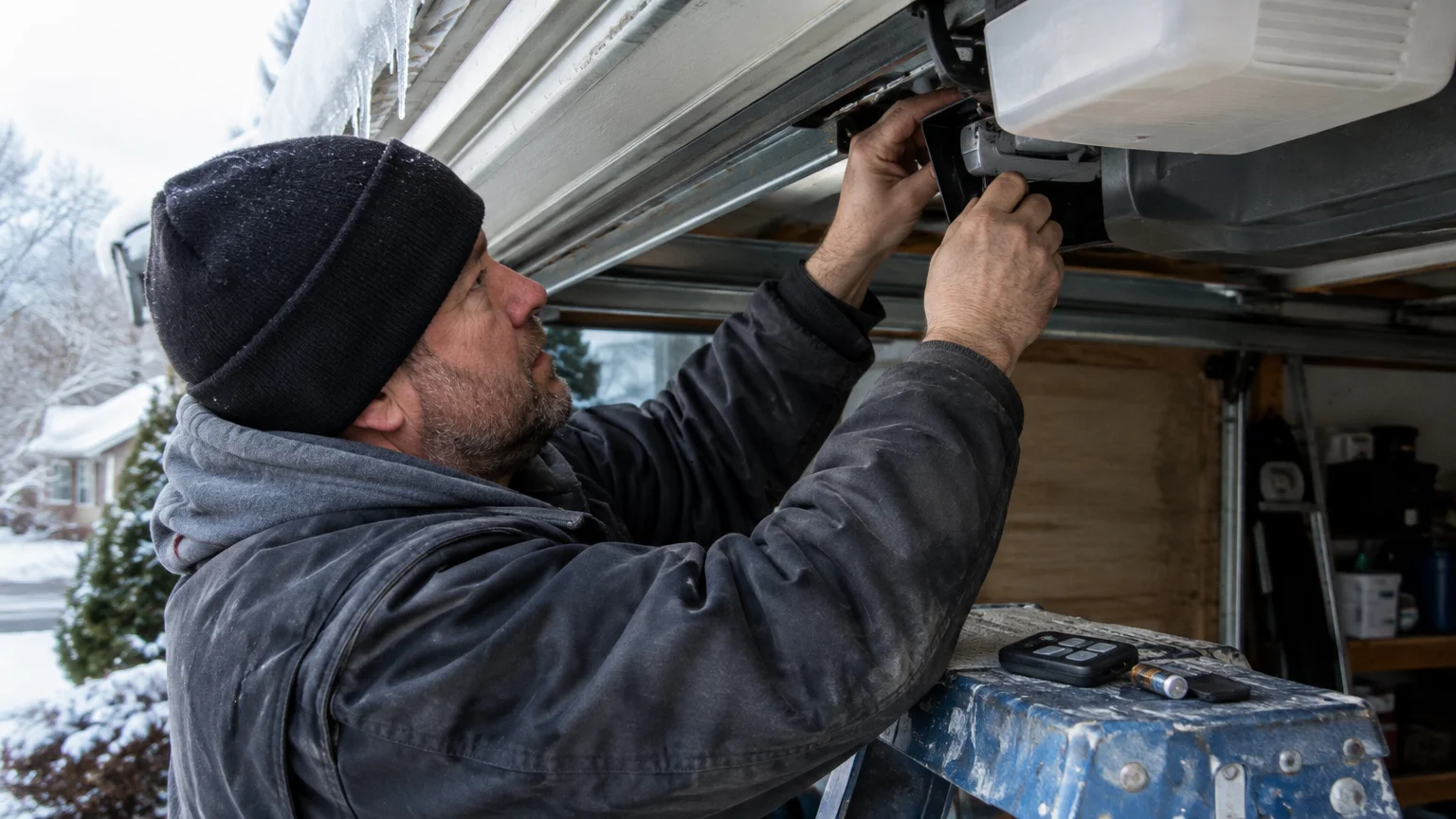
- Why is my garage door opener not working?
- Could a power or control problem be stopping the opener?
- What does it mean when the opener runs but the door does not move?
- Why does the garage door reverse, stop, or close unevenly?
- How does cold weather affect a garage door opener?
- Can resetting the opener fix the problem?
- When should you call a garage door repair professional?
- Frequently Asked Questions
Why is my garage door opener not working?
A garage door opener may stop because it has no power, the remote sends no signal, or the door is stuck. A garage door opener is the motor and drive system that moves the door. Start by checking whether the opener responds at all.
Press the wall control once and listen. A light, click, hum, or motor sound can give useful clues. No response may point to power, wiring, a control, or a locked motor. A humming motor with no movement may point to a drive fault or a door that is too heavy.
How to tell whether the opener or the door is at fault
A door fault can look like an opener failure. The door may have left its tracks, caught on a damaged roller, or lost support from a broken garage door spring. The opener may stop to protect itself. Do not force a door that feels very heavy or hangs at an angle.
The emergency release cord separates the door from the opener. It does not make a dangerous door safe. You may look for clear damage from the floor, but do not handle springs, lift cables, or bottom brackets. These parts can hold great force.
Safety checks before troubleshooting
Keep people, pets, and cars away from the door. Do not stand below a moving door or put your hands near hinges, rollers, or the drive rail. Check that the door is not locked and that nothing blocks its path.
Safe checks include confirming power, cleaning sensor lenses, changing remote batteries, and looking for clear blocks. Durango Garage Door Repair helps property owners separate simple control faults from problems that need Garage Door Opener Repair or Garage Door Off Track Repair.
Could a power or control problem be stopping the opener?
Yes. A tripped breaker, unplugged opener, damaged wall control, weak battery, or bad receiver can stop a sound system. These faults are common because several controls must work before the door moves.
Power supply, wall consoles, and circuit breakers
First, check whether the opener light works or the motor makes sound. Check the outlet and breaker panel without opening the motor case. A breaker that trips again may show an electrical fault. Do not keep resetting it.
The wall console may be locked or damaged. Some consoles have a vacation or lock setting that blocks remote controls. If the wall button works but the remote does not, the opener may have power while the remote needs help. If neither control works, the fault may be deeper.
Do not remove electrical covers or test live wires. A trained repair professional can check the opener safely. They can inspect the control board, wiring, and receiver. This matters for homes, businesses, and rental properties where a failed control can block entry.
Remote controls, keypads, and signal interference
Remote batteries are a simple place to start. A remote may also lose its program after a power fault or battery change. A keypad can fail because of worn buttons, a weak battery, moisture, or the wrong code.
Large metal items, damaged antenna wires, and some electronic devices may affect the signal. Test the remote from safe spots, without standing below the door. A universal remote must match the opener and be programmed in the right way.
A smart garage door opener may show a fault in its app. An app message does not prove the door is safe to move. The door, sensors, and drive parts still need a physical check. Durango Garage Door Repair can help property owners decide if the issue is a remote, keypad, receiver, or opener fault.
What does it mean when the opener runs but the door does not move?
When the motor runs but the door stays still, the trolley, gear, chain, belt, or screw drive may not transfer force. The emergency release may also be disconnected. A loud hum can mean the opener is working against a stuck or very heavy door.
Disconnected trolleys, worn gears, and stripped drive components
The trolley is the moving part that links the opener rail to the door arm. If it is disconnected, the motor may run without pulling the door. A worn gear may cause grinding sounds or leave plastic pieces inside the case. A belt can slip or break, while a chain can become loose or damaged.
These parts need more than a quick look. The right repair depends on the opener model, door weight, drive type, and mounting hardware. A belt drive system may need different parts from a chain or screw drive system.
You may look for clear separation near the rail without opening the motor unit. Do not force, pull, or adjust the drive system while it has power. Repairs may involve stored force, moving parts, and alignment problems.
Why forcing the door can cause further damage
Forcing the door can bend tracks, harm rollers, pull fasteners from the frame, or strain the opener. It can turn a small control fault into a larger door repair. If the door is crooked, very heavy, or partly open, leave it still.
Do not pull loose cables or try to reconnect a spring. Garage Door Cable Repair and spring work need the right tools and training. The door may fall if a lifting part is moved. A professional can secure the door before testing the opener.
Why does the garage door reverse, stop, or close unevenly?
A door that reverses or stops may be reacting to its safety system or resistance in the door. The opener should stop when it senses an unsafe condition. Dirty sensors, wrong travel settings, damaged tracks, and a broken garage door spring can cause similar signs.
Safety sensors and travel-limit settings
Safety sensors sit near the bottom of the door tracks. They send an invisible beam across the opening. If the beam is blocked, out of line, dirty, or affected by bad wires, the door may refuse to close or reverse.
You can gently clean the sensor lenses and remove items from the beam path. Both sensor lights should show normal operation for that model. Do not bend, bypass, cover, or point the sensors away from the opening.
Travel limits tell the opener where the door should stop. If these settings change, the door may stop too soon, press too hard, or reverse. Setting them needs care because a wrong setting can weaken garage door safety. The owner manual may explain basic programming, but damaged hardware needs service first.
Door balance, broken springs, and binding hardware
A balanced door stays close to its position when separated from the opener. A door that drops, rises, or feels very heavy has a mechanical fault. Broken torsion or extension springs are common causes. Rollers, hinges, tracks, and cables can also bind.
Springs, cables, and bottom brackets are dangerous parts. They hold stored force and can cause serious injury if released the wrong way. This is not safe do-it-yourself work. Do not wind springs, remove brackets, lift cables, or change spring settings.
A door that closes unevenly needs care before the opener is adjusted. Garage Door Maintenance may help reduce wear, while Garage Door Off Track Repair may be needed after the door leaves its tracks. Do not use the opener until the door moves safely by hand.
How does cold weather affect a garage door opener?
Cold weather can make a door harder to move by stiffening rollers, seals, grease, and other parts. Moisture may freeze at the floor and hold the door down. The opener may then stop, reverse, or sound strained even when its motor works well.
Frozen seals, stiff rollers, and increased door resistance
A frozen garage door seal can stick to the driveway or floor. Trying to open the door can tear the seal or strain the opener. Ice may also collect around tracks or under the door. Clear the opening before testing it again.
Cold can weaken remote batteries and make old grease thicker. Rollers may move poorly, and a weak spring may become more noticeable. These issues can affect belt drive, chain drive, and wall mount systems.
You can look for ice, remove loose snow, and change a weak remote battery. Do not use an open flame or pour hot water over electrical parts. Water can freeze again and create a larger fault.
Safe winter checks and when not to adjust components
The safest winter check is visual. Look for ice at the floor, blocked sensors, bent tracks, and loose hardware that you can see. Do not scrape hard against seals, pull the door upward, or run the opener again and again when the motor strains.
If the door stays heavy after the ice clears, the fault may involve springs, cables, rollers, or balance. Cold weather can reveal a fault, but it does not make risky repairs safe. A repair professional can check the full system and help protect the opener from more strain.
Can resetting the opener fix the problem?
A basic reset may clear a short control error. It cannot repair broken hardware, a failed motor, bad wiring, or an unbalanced door. Resetting may also erase remote and travel settings, so use it with care.
What a basic reset can and cannot resolve
A reset may help after a short power loss or control glitch. The exact process changes by maker and model. Follow the product manual and stay clear of the door during any test.
A reset will not fix a broken spring, stripped gear, off-track door, failed sensor wire, or bent rail. It may hide the real fault for a short time. Stop testing if the opener trips a breaker, smells hot, grinds, or repeats the same failure.
Reprogramming remotes, keypads, and travel settings
Remote and keypad programming is often safe when the door and opener are in good shape. The owner manual should guide the process. The learn button may be on the motor unit, and programming may remove older remotes from memory.
Travel settings need more care. They control where the door stops and how the opener reacts to resistance. Wrong settings can cause impact, reversal, or unsafe pressure. Reprogramming should not replace a check of the door balance and safety sensors.
When should you call a garage door repair professional?
Call a professional when the door is stuck, heavy, crooked, noisy, off its tracks, or held by damaged springs or cables. Prompt service also makes sense when the opener smells hot, trips power, grinds, or fails after safe checks.
Warning signs that require prompt service
The following signs should not be ignored:
- A broken or loose spring, cable, roller, track, or bottom bracket
- A door that falls, sags, binds, or will not stay in place
- A motor that hums, grinds, overheats, or trips the breaker
- Safety sensors that still fail after careful cleaning
- An opener that works only sometimes or leaves the door unsecured
Do not attempt torsion spring, extension spring, cable, or bottom-bracket repairs. These jobs involve stored force and can damage the door or cause serious injury. The same warning applies to forcing an off-track door back into place.
What an opener repair or replacement visit involves
A technician first checks the door, tracks, rollers, springs, cables, sensors, controls, and opener drive. This helps show if the opener caused the fault or reacted to a door problem. The repair may involve a control, remote, sensor, gear, belt, chain, or motor.
If the opener is worn or does not suit the door, replacement may be safer than repeat repairs. The right choice depends on door size, use, noise needs, ceiling space, and power. Belt drive, chain drive, and wall mount systems fit different places.
The final cost depends on the parts, access, damage, urgency, and system type. A professional should confirm the work and final cost on a quote before repairs begin. Durango Garage Door Repair serves homeowners and property owners across the main Durango area, from Grandview and Three Springs to Bayfield, Ignacio, and nearby communities. The team helps with urgent opener and door faults.
Key takeaways
- A dead opener may have a power, remote, sensor, or door fault.
- A motor that runs without moving the door may have a drive problem.
- Springs, cables, and bottom brackets are not safe do-it-yourself repair parts.
- Cold weather can increase door resistance and reveal weak components.
- Safe checks are useful, but force can turn a small fault into a large repair.
Conclusion
Most opener faults leave clues. A silent unit points toward power or controls. A running motor with no movement points toward the trolley or drive. Reversing and uneven travel often point toward sensors, balance, tracks, or springs.
Safe checks can help narrow the cause, but they should never involve force or risky parts. For urgent help across the Durango area, Contact us when a garage door opener problem affects access, security, or safe use. Durango Garage Door Repair can help you understand the next safe step.
Frequently Asked Questions
Why is my garage door opener clicking but not opening the door?
Clicking may mean the wall control or remote sends a signal, but the motor does not start. It may also point to weak power, a bad relay, a locked control, or a motor fault. Check the outlet and remote battery safely. If the door is heavy or stuck, stop testing and seek trained help.
Can a garage door opener work with a broken spring?
The opener may run with a broken spring, but it should not lift the door. Springs carry much of the door’s weight. Using the opener can burn out the motor or harm the drive. A broken spring needs trained repair. Leave the opener unused until the door is safe.
Why does the garage door close and then open again?
The door may reverse because the safety sensors are dirty, blocked, or out of line. It may also meet resistance from ice, a damaged track, worn rollers, or wrong travel settings. Clean the sensor lenses and clear the opening. Do not bypass the sensors or adjust dangerous door parts.
Is a smart garage door opener more reliable?
A smart opener adds app control, alerts, and remote checks. It still depends on sound door hardware, sensors, power, and an internet connection. Smart features do not prevent broken springs, off-track doors, or worn drive parts. Have the door checked when the system reports a fault.
Should a homeowner reset an opener before calling for help?
A homeowner may follow the maker’s basic reset directions when the door is in good condition and no dangerous damage is visible. A reset cannot repair springs, cables, tracks, gears, wiring, or a failed motor. If the opener smells hot, trips power, or strains, stop testing.
If you are not sure what you are dealing with, it is worth having someone look at it before it turns into a bigger job. Get in touch with Durango Garage Door Repair today and we will tell you where you stand.