Garage Door Off Track Repair in Durango, CO
Getting a derailed door back on involves bracing it, guiding it into straight track on good rollers, and correcting the cause so it won't jump out again.
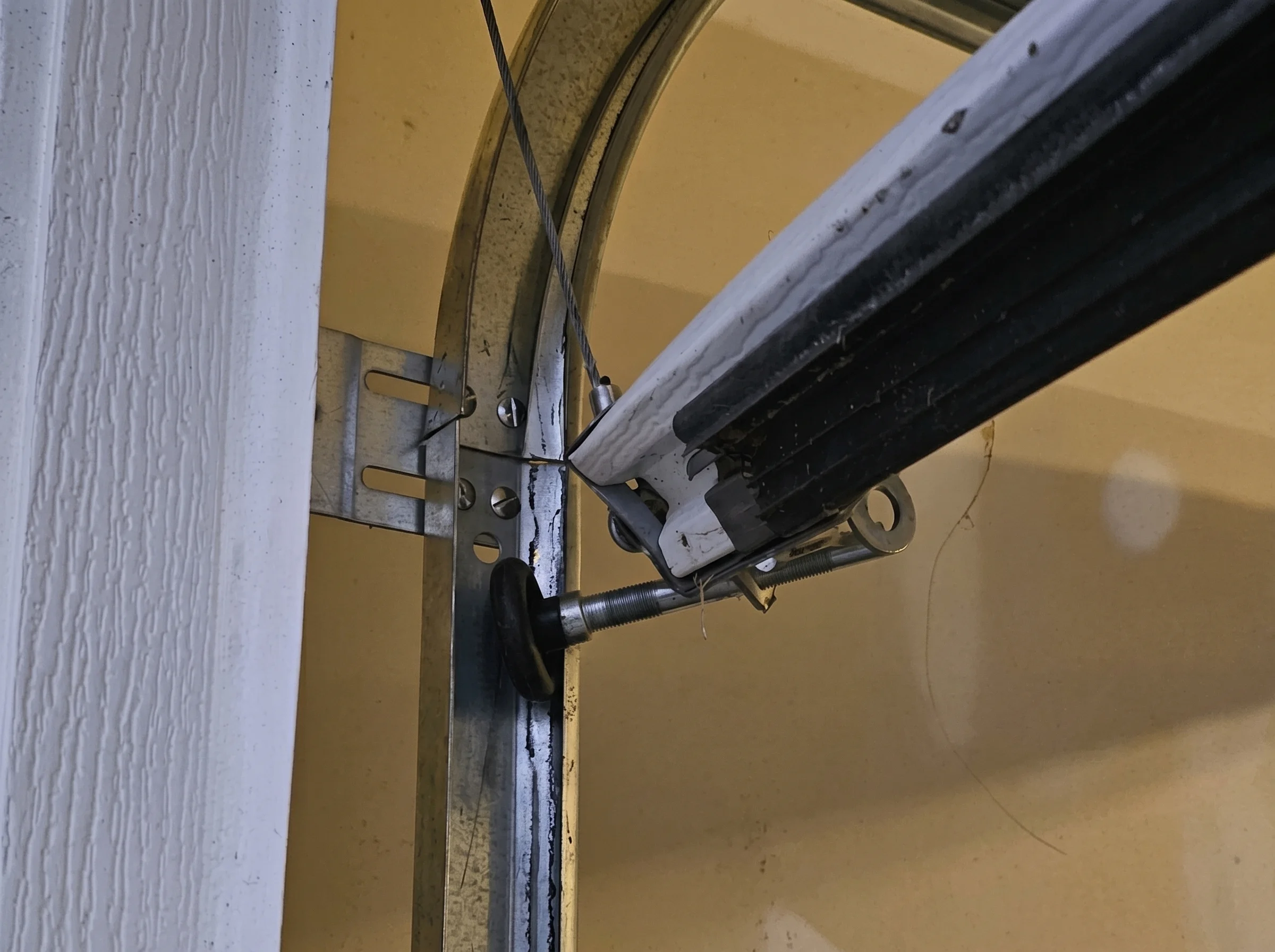
A roller outside its channel, a door sitting crooked or wedged, or a panel bent where it snagged all mean your garage door in the Durango area has left the track. Leave the opener unused and stop opening the door.
How to recognize a derailed door
A roller lying beyond the track edge, usually low on the door or around the bend where the track curves toward the ceiling, and sometimes several.
A door crooked or jammed, frequently halfway up.
A panel creased or bulging because the opener kept driving against the jam.
Track that looks warped, dinged, or loose from the wall.
Scraping, cracking or grinding noises in the moments before it jumped out.
Derailed door? Leave the opener alone and tell us which side slipped out, and what caused it.
Contact UsReasons doors leave the rails
A bumper strike
Reversing into a shut or half-raised door heads the list of causes, and the bottom of the track tends to bend as well.
A cable gone slack or snapped
One side drops, the door twists and wheels pop out. For a slack cable, the cable repair page covers that half.
Tired or cracked rollers
Once its bearing fails, a roller skids rather than turns, and it leaps out at the first rough patch.
Shifted or warped track
Years of shaking loosen the brackets that fasten the track to the wall, and the rails drift apart until a roller escapes.
An object under the door
A bin, bike or mower left beneath a closing door can derail it, especially if closing force is set high.
Secure the scene
Keep the opener off
It keeps driving the door, bending panels or tearing track from the wall.
Leave the emergency release alone if the door is partly up and derailed. It may drop or swing completely free of the track.
Never pound rollers back into place while weight is on the door. A derailed door still holds spring tension and can move without warning.
Stay away from the door, and mention any trapped vehicle when you write in.
What the work involves
Bracing comes first, so the door can neither fall nor slide mid-job, and spring tension is handled as needed.
Damage gets sized up
Which wheels are affected, how much rail is bent, if panels are creased, and what set it off.
Straightening the track or replacing it
Small bends may be worked straight; creased or ripped rail gets swapped.
Worn or broken rollers come out, and hinges get inspected, because one with a crack will let a roller slip again.
The door goes back into its tracks, brackets are snugged up, and it is cycled fully on the opener. Afterward the opener's force and travel limits are checked once more.
Say what happened to the door
Keep it brief at first. Naming the broken part is optional; saying what happened to the door is enough.
Rollers
Rollers decide how smoothly a door runs and wear out first; January lows near 13°F in Durango stress them.
Basic steel rollers without bearings are the simplest design. They rattle and wear the track down along with themselves.
Nylon wheels on sealed bearings are much quieter and ask for hardly any lubricant.
Wobble, flat spots, cracked rims or a frozen bearing signal a worn roller.
A door that is merely noisy rather than broken often needs little more than new rollers, a job that commonly fits into a maintenance visit.
What shapes the cost of an off-track fix
How far the door slipped
A pair of rollers at a single corner, or a door swinging loose.
Track condition
Trueing a bend versus changing lengths, on one rail or both.
Rollers and hinges worth replacing.
Creased or split door panels
A badly bowed panel might need replacing, and matching an older door's style can be tricky.
A failed cable or spring that triggered the slip.
If a panel can't be saved
A hard knock can leave panels too bent to straighten. Often one panel can be swapped while the rest of the door stays, provided a matching panel is still being manufactured.
If it isn't, or several panels are damaged, garage door installation lays out the replacement choices.
Frequently asked
Is it okay to press the rollers back in on my own?
Only when one roller has slipped out low on a closed door and neither the track nor a cable is damaged. Beyond that, don't try it: the door is heavy, loaded by springs, and can shift with no warning at all, so stop and step back.
What makes my door derail on one side again and again?
Typically a track that sits slightly out of line, a loose bracket, or a cable on that side needing adjustment. Putting the door back without correcting the cause just invites a repeat.
Do the tracks need lubricant?
No. Wipe them dry, since grease holds grit, even with about 63.7 inches of snow a year in Durango. Bearings and hinges get the oil.
More garage door services
Garage Door Cable Repair
Lift cables that fray, snap or slide off, and doors hanging unevenly.
Read more →Garage Door Spring Repair
Failed torsion or extension springs replaced with ones matched to the door's weight.
Read more →Garage Door Installation
Replacement and first-time doors in steel, wood, composite or glass, sized to your opening.
Read more →Reach out
Say where the door sits (shut, open or partway), which side slipped, and whether a cable looks slack.
Photos of each side from a few feet back help. Anyone working inside city limits needs a license from the City of Durango Business Licensing Office.