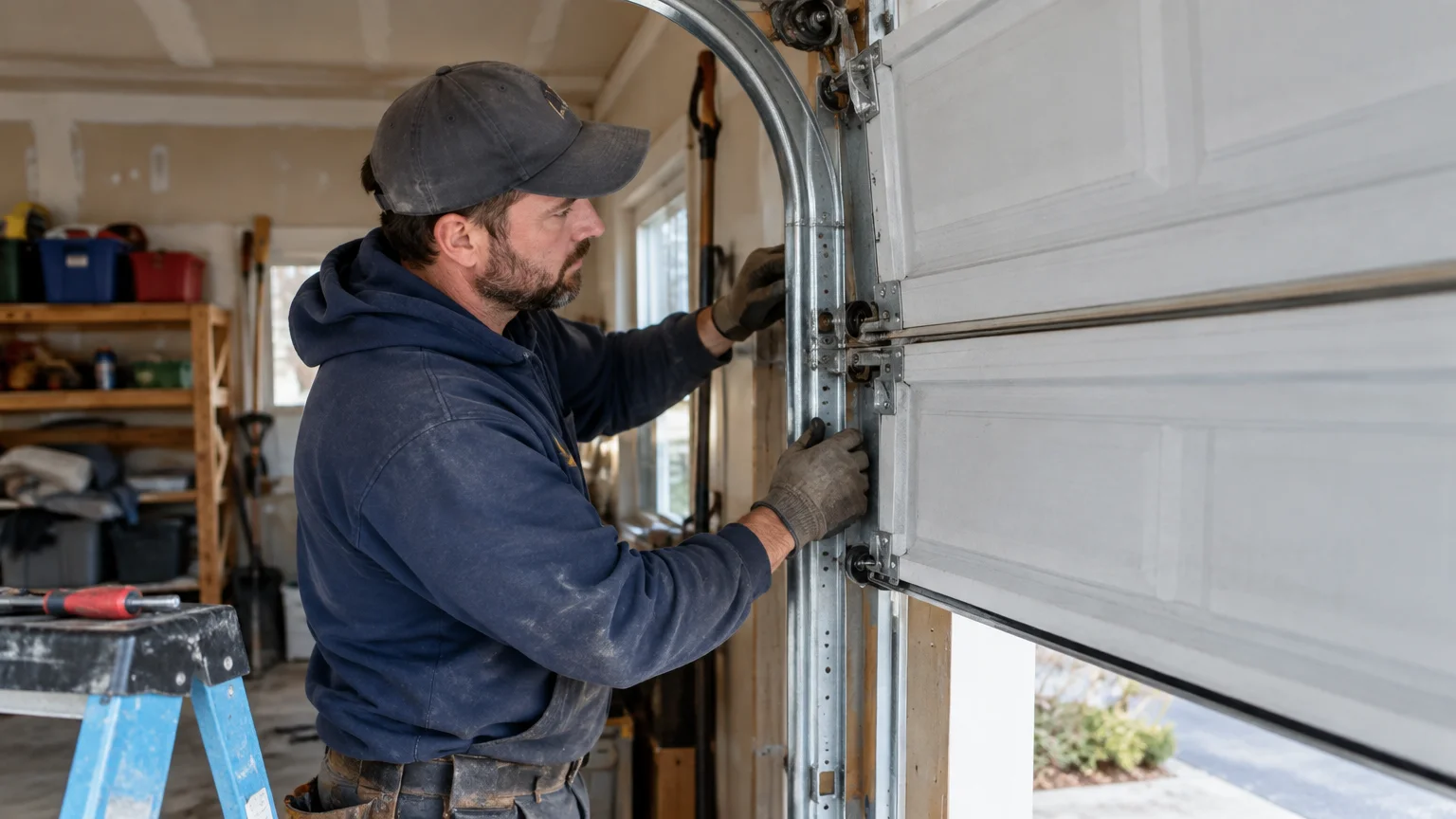
To understand how to fix garage door off track problems safely, stop using the door and keep people away from it. Worn rollers, loose hinges, an impact, or uneven movement can pull a door out of line. Do not touch springs or cables. A trained repair professional can find the cause and make the door safe to use again.
Why does a garage door come off its track?
A garage door can leave its tracks when parts wear down, hardware comes loose, or something hits the door. Rollers guide the door along metal tracks. Hinges join the door sections and let them bend as the door opens. When one part fails, the door may tilt or move unevenly.
How do rollers, hinges, and tracks affect alignment?
Rollers sit inside the tracks and help the door move. Worn, cracked, or stuck rollers may not follow the track as they should. A damaged hinge can let a door section shift. A bent or loose track can also change the path the rollers take. These parts work together, so damage in one area can strain other parts.
A garage door roller may need replacement if it is worn or broken. A cracked hinge may need to be replaced, too. If a track is bent, loose, or out of line, have a repair professional check it before using the door again. The right repair depends on what caused the issue and how much of the door is affected.
What can cause a garage door to come off track?
A car or another object hitting the door can bend a panel or track. Loose hardware may let parts shift over time. Worn rollers, a damaged panel, or uneven movement can also put stress on the door. Sometimes one part fails, but the rest of the system keeps moving and pulls the door out of line.
Do not keep testing a door that looks crooked or makes a new grinding sound. Using it may cause more damage or make the door fall. Durango Garage Door Repair can help property owners find the cause and learn whether they need off-track repair, roller replacement, or another fix.
How can you tell if a garage door is off track?
A garage door may be off track if it hangs crooked, has a new gap on one side, or has a roller outside its metal track. Grinding, scraping, binding, or sudden stops can also warn of a problem. Stop using the door if it looks uneven or moves in a new way.
What visible signs should homeowners check?
Look at the door, tracks, and panels from a safe distance. Do not touch parts that look bent or loose. Watch for these signs:
- One side of the door sits higher than the other.
- A roller is outside the track or no longer sits inside it.
- A new gap appears between the door and frame on one side.
- A panel looks bent, cracked, or out of line with nearby sections.
- A track looks bent, loose, or pulled away from its support.
A damaged panel can affect the door’s balance and movement. If a panel is cracked or badly bent, a professional can check if repair or replacement is right. The answer depends on the door design, where the damage is, and the state of nearby panels and hardware.
What sounds or movement point to a problem?
Grinding, scraping, or a loud new rattle may mean a roller or another part is not moving well. The door may also bind, stop partway, or move unevenly. An opener that stops working can also leave the door stuck. But unusual sounds or a crooked door may point to a problem with the door itself.
Do not keep pressing the opener button to see if the door will move. Repeated tries may put more strain on the opener and door parts. If the door is open and seems unsteady, keep people and pets away from the opening. This advice applies to homes, shops, and other buildings in Durango.
Is it safe to fix an off-track garage door yourself?
Homeowners can look for visible damage from a safe distance and clear loose items from the doorway. Do not force the door, move rollers back into place, or adjust springs, cables, or bottom brackets. These parts can be under strong tension and may cause serious harm if they move without warning.
What should you do right away?
Use these safe actions while you wait for help:
- Stop using the opener, and do not pull or push the door.
- Keep children, pets, and other people away from the door and tracks.
- Move cars and loose items only if you can do so safely.
- If the door is closed and secure, leave it closed until it is checked.
- Get help from a trained repair professional if the door is crooked, stuck, or unsteady.
These steps do not fix the door. They help limit movement and keep people away from danger. If the door is partly open or may fall, do not try to hold it or place anything under it. Wait in a safe place and explain what you see when arranging garage door opening repair.
Why are springs and cables not a DIY repair?
Garage door springs help lift the door. Lift cables work under tension as the door moves. A bottom bracket may also connect to a cable and spring system. If these parts let go suddenly, they can cause severe harm. Without the right tools and training, a repair attempt may also make the door less stable.
A professional is not needed for every garage door task. Safe upkeep can mean watching how the door moves, keeping the doorway clear, and cleaning dirt from track areas you can reach safely. Do not bend or loosen anything. An off-track door, damaged roller, broken hinge, spring, cable, or bottom bracket needs trained care.
How do professionals repair and prevent an off-track door?
A repair professional checks the door and related parts to learn why it left the track. The check may include tracks, rollers, hinges, panels, cables, springs, and opener movement. The repair depends on what is damaged. Moving a roller back into place may not fix the cause.
What does a repair inspection look for?
The professional checks whether the tracks are bent, loose, or out of line. They look for worn rollers, cracked hinges, damaged panels, and shifted hardware. They may also check how the door moves and whether its parts are balanced. This can help show what caused the door to come off track.
A damaged part may need repair or replacement before the door can move safely. A broken panel may need repair or a replacement panel that fits the door. A worn or cracked roller or hinge may need to be changed. If the opener is the cause, garage door opener repair may be needed instead of track work alone.
The right repair depends on the door type, the part that failed, and whether other parts were strained. A professional should explain what they found and what work is needed before the door is used again. Homeowners can ask what caused the problem and whether other parts need care.
How can routine checks help prevent another problem?
Regular checks can help homeowners notice changes before a door stops working. Watch and listen while it moves, but stay clear of moving parts. Keep the space around the door free of objects that could block its path. If a new sound, gap, or uneven movement appears, stop using the door and arrange a check.
Do not tighten track hardware or adjust springs and cables as routine upkeep. These tasks can affect the door’s balance and safety. Garage door maintenance from a trained professional can help find worn rollers, loose hinges, or track trouble before it causes another problem. A regular garage door tune can also help spot changes, but it does not replace a repair when a door is off track.
Frequently Asked Questions
Can a garage door still work if one roller is off track?
It may move, but that does not mean it is safe. A roller outside the track can make the door hang unevenly and strain other parts. Stop using the opener and keep away from the door. Have a professional check the rollers, track, hinges, and related hardware.
Can a damaged panel make a garage door come off track?
Yes. A bent or cracked panel can affect how the door sections line up and move. A hard impact may also damage the track or nearby hardware. A professional can check the full door and decide whether panel repair, replacement, or another repair is needed.
Should someone close an off-track garage door by hand?
No. A crooked or unsteady door may shift or fall if pushed or pulled. Do not try to close it, lift it, or hold it in place. Keep people away from the opening and get help from a repair professional. If the door is already closed and secure, leave it that way.
When should a homeowner call for garage door repair services near me?
Get professional help when the door hangs crooked, a roller is outside the track, or the door grinds, binds, or stops without warning. Do not wait if the door is unsteady or blocks a needed entrance. Local repair in Durango can help restore safe access and check for related damage. Choosing the best garage door repair team means finding trained help that checks the cause, not just the visible sign.
Key takeaways
- Stop using a door that looks crooked, binds, or makes new grinding sounds.
- Worn rollers, damaged hinges, loose tracks, and impacts can cause misalignment.
- Keep people away and never adjust springs, cables, or bottom brackets.
- A professional should find and repair the cause, not just move a roller.
Conclusion
An off-track garage door can affect access and the safety of a home or business. Gaps, crooked panels, and unusual sounds are reasons to stop using it and keep people away. Safe checks are useful, but repairs to tracks, rollers, hinges, panels, springs, or cables need trained help. Durango Garage Door Repair helps property owners deal with door problems and restore safe movement. For urgent help with a stuck or unsteady door, Contact us today.
Durango Garage Door Repair can help you understand what needs attention.
If you are not sure what you are dealing with, it is worth having someone look at it before it turns into a bigger job. Get in touch with Durango Garage Door Repair today and we will tell you where you stand.