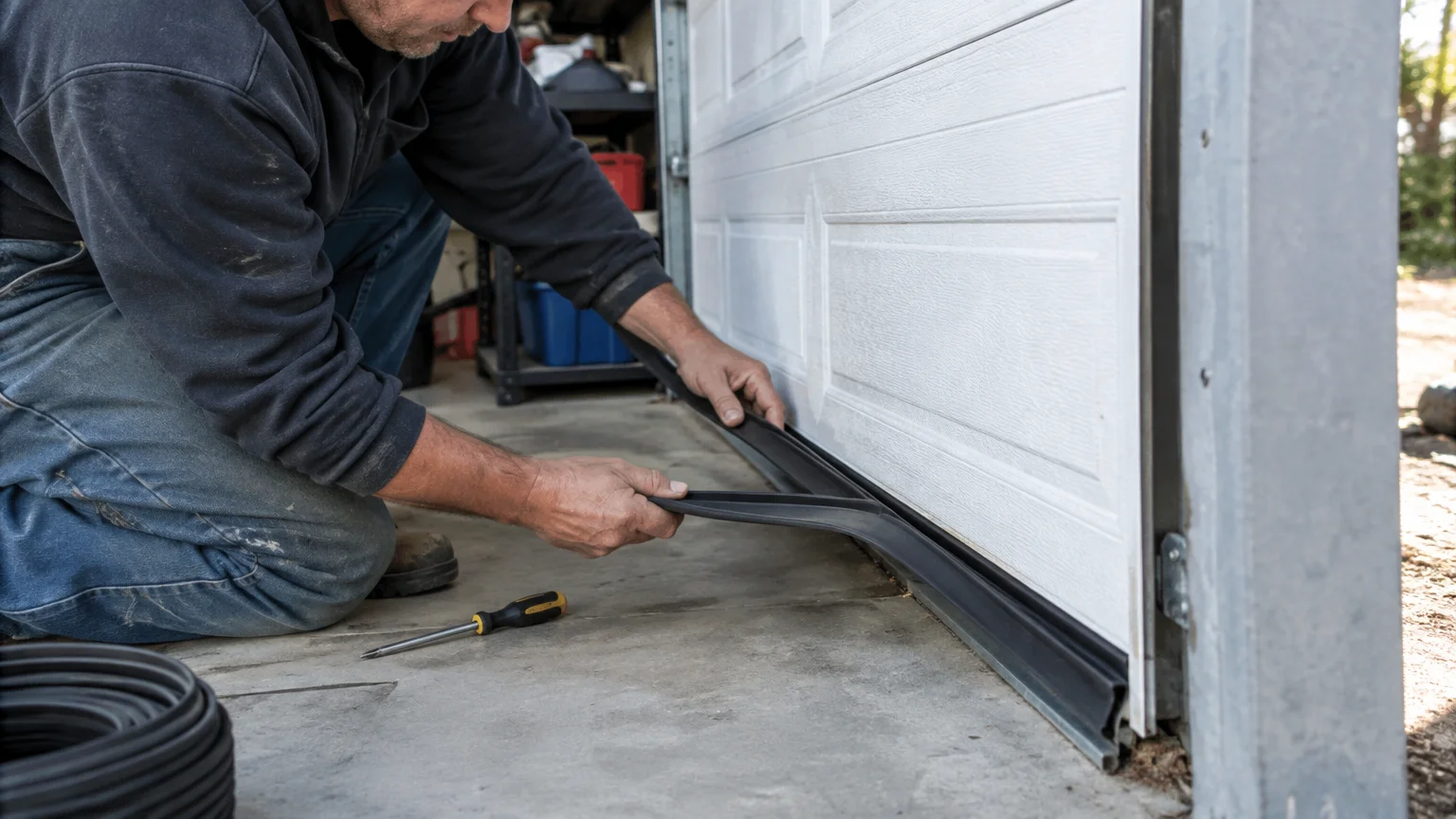
Replacing a worn seal can help block drafts, dust, leaves, and water from entering beneath your garage door. To learn how to replace garage door bottom seal, first match the new seal to the channel that holds it. The job is often manageable when the door is stable and the channel is sound. Keep clear of springs, cables, and other parts under tension.
Table of Contents
- How can you tell if your garage door bottom seal needs replacing?
- What type of garage door bottom seal do you need?
- What tools and safety steps do you need before starting?
- How do you remove the old garage door bottom seal?
- How do you install a new garage door bottom seal?
- How can you stop water from getting under the garage door?
- When should you call a garage door repair professional?
- Frequently Asked Questions
- Key takeaways
- Conclusion
How can you tell if your garage door bottom seal needs replacing?
A worn bottom seal may look cracked, flat, loose, or missing in places. With the door closed, look for daylight or gaps along the floor. Drafts, dust, leaves, and water inside the garage may also mean the seal no longer touches the floor well.
Check the whole seal, including both ends and the area near each corner. A seal may shift or shrink, leaving a gap at one end. If it is torn or stiff, it may not bend enough to cover small gaps. Keep your hands away from the moving door as you look.
Is the seal worn, or is the threshold the problem?
A threshold is a raised strip fixed to the floor below the closed door. It can help keep water out when the floor has low spots or slopes toward the garage. If the seal looks whole but water still gets in, check the floor and threshold before choosing a new seal.
A new seal will not fix a door that sits crooked or stops above the floor. Watch the door close from a safe place. If one side stays higher, the door shakes, or a large gap remains, stop using it and seek help. Durango Garage Door Repair can help property owners tell a worn seal from a larger door problem.
What type of garage door bottom seal do you need?
The new seal must fit the retainer on the bottom of the door. A retainer is the metal or plastic channel that holds the seal. Retainers and seal shapes vary, so a replacement that looks close may still slip out or leave gaps.
Common seal shapes include T-shaped, bulb-shaped, and U-shaped styles. Some doors use a wide loop or a seal made for one type of track. The right choice depends on the channel shape, the slot size, the door width, and the gap beneath the door. Check the fit before you buy a replacement.
How can you check the seal profile?
With the door closed and stable, look at the end of the old seal. A clear photo of that end may help you compare it with new seals. If the end is hidden, do not pull the seal out just to check its shape. Look for information from the door maker or ask a supplier for help.
Measure the door and old seal only if you can do so safely. Follow the new seal maker’s directions for measuring and trimming. Do not guess by copying a seal from another door. If the retainer is bent, rusty, or hard to identify, Garage Door Maintenance can include a closer check before a new seal is fitted.
What tools and safety steps do you need before starting?
A simple seal change may need a matching new seal, gloves, a tape measure, and a tool to clean the retainer. Some seals also need careful trimming with a suitable hand tool. Check the product directions first, because the tools depend on the seal and channel.
Keep children, pets, and stored items away from the work area. Use good light, and never work beneath a door that moves, sits crooked, or will not stay in place. Do not loosen a cable, spring, bottom bracket, or other part that holds door weight. These parts can move with great force and cause serious harm.
How can you prepare the work area safely?
If the door is safe to use, close it before looking at the bottom edge. Disconnect the opener only as its manual says, and keep the remote away from anyone who might use it. Do not trust the opener to hold the door in place. If the door feels heavy or moves by itself, stop and call a trained technician.
Before you start, look for loose parts, sharp edges, damaged tracks, and trapped dirt. Keep fingers out of the retainer slot and away from door joints. A simple seal change should not require work on springs or lift cables. If the job seems to need that work, stop; it is no longer a safe home repair.
How do you remove the old garage door bottom seal?
Remove the old seal only when the door is stable and the retainer looks sound. Many seals slide out from one end of the channel. Others use clips or a different design. Follow the door or seal maker’s directions instead of pulling hard.
Step 1: Check how the seal is held
Look at the end of the retainer to see how the seal fits. Remove an end cap or clip only when the maker’s directions explain how. Do not pry against the door panel or bend the channel. If the seal does not move with gentle effort, stop and check how it is made.
Step 2: Slide out the old seal and inspect the track
If the seal slides freely, pull it along the retainer without twisting it. Work slowly, and stop if it catches or bends the channel. When the seal is out, wipe away dirt with a cloth and use a soft brush for loose bits. Do not cut or reshape the retainer.
Look over the channel for rust, sharp damage, or places where it has pulled away from the door. Damage can stop a new seal from sitting flat. Do not try to straighten the channel while it is attached if that could affect the door. Ask a garage door repair professional to check damage that is more than light surface dirt.
How do you install a new garage door bottom seal?
A new seal should fit into the clean retainer without force. The right method depends on the seal style, so follow the maker’s directions. A seal that is twisted, stretched, or partly outside the channel may leave gaps and wear sooner.
Step 1: Fit the replacement seal
Line up the new seal with the retainer opening. Feed it in a little at a time, keeping it straight as it moves along the door. If it binds, stop and check that the seal shape matches the channel. Do not use a sharp tool to force it through or pry the channel open.
Step 2: Trim and check the fit
Trim the seal only as its maker directs. Use a suitable tool and keep your hands away from its cutting edge. The ends should sit neatly without bunching or leaving a large gap. Put back any simple end caps you removed, if the directions call for them.
Close the door and look along the bottom from a safe place. The seal should touch the floor evenly without folding beneath the door. If it pushes the door out of line or leaves a clear gap, stop. Check the seal fit and floor shape; do not adjust springs or cables to make it fit.
How can you stop water from getting under the garage door?
First, find where the water enters. A damaged seal may let water pass under the door, but a sloped driveway, low floor spot, or blocked drain may also send water inside. After rain, look at the floor and note whether water comes in along the whole door or just one section.
What should you check around the door?
Look for an even gap when the door is closed, a seal that touches the floor, and a threshold that sits firmly in place. Clear leaves and dirt from outside the door. Do not change the door’s alignment or loosen parts to close a gap. A crooked door may need repair, not a different seal.
A garage door threshold may help when the floor is sound but water still reaches the door. It is a raised strip fixed to the floor and made to work with the door seal. Pick one that suits the door and floor, and follow its fitting directions. A threshold cannot fix poor drainage, a damaged door, or water entering through a wall.
In Durango, heavy rain can make small gaps easier to notice. Check the area after wet weather, but do not stand in the path of a moving door. If water keeps getting in despite a sound seal and threshold, have the floor slope, drainage, and door fit checked.
When should you call a garage door repair professional?
Call a professional if the retainer is damaged, the door sits unevenly, or the seal will not come out without force. Stop if the door feels heavy, moves by itself, comes off track, or has loose cables. These signs may point to a larger door problem, not a simple seal change.
Which signs mean the job is not a DIY repair?
Do not handle a spring, lift cable, or bottom bracket. These parts help hold the door’s weight and can release force if moved the wrong way. A trained technician has the right tools and skills to check them safely. Garage Door Off Track Repair and Garage Door Cable Repair address issues that a new bottom seal cannot solve.
A dead opener or a door that will not open may point to a separate fault. Do not keep trying to force the door. A professional can check the opener, tracks, and door parts to find the cause. Durango Garage Door Repair serves Durango, including Grandview, Three Springs, Bayfield, Ignacio, and nearby communities. The team can help sort out whether the next step is a seal, threshold, or repair.
How can you help a new seal last?
Keep packed dirt, leaves, and grit out of the seal and retainer. Clean them gently when needed, and look for splits or loose spots during normal garage care. Avoid strong cleaners unless the seal maker says they are safe. Do not pull a stuck seal or use it to lift the door.
Homeowners can safely do these simple checks and cleaning tasks when the door is stable. You do not need a professional just to look for daylight, remove loose dirt, or check the seal for cracks. But call for help if you find damage, an uneven door, or parts under tension. Regular, gentle care can help you notice a problem before it grows.
Frequently Asked Questions
Can a homeowner replace a garage door bottom seal?
A homeowner can often replace a bottom seal when the door is stable, the retainer is sound, and the seal slides out easily. The work should not involve springs, cables, or bottom brackets. Stop and get help if the door is crooked, heavy, or hard to move.
How do you know which replacement seal fits?
Check the old seal’s shape and the channel that holds it. Measure the door as the seal maker directs, then match the shape to the retainer. If the channel is hidden or damaged, look for the door maker’s information or ask a professional to identify the right style.
Can a new seal stop every water leak?
No. A new seal may help when water slips through a gap under the door. It cannot fix poor drainage, a sloped floor, or water coming through a wall. Check where the water starts and whether the door touches the floor evenly before choosing a fix.
Should a garage door threshold replace the bottom seal?
A threshold usually works with the bottom seal instead of replacing it. It can add a raised barrier where the floor is uneven or water reaches the door. Follow the threshold maker’s directions, and make sure the door can open and close without catching or shifting.
What if the seal will not slide out of the retainer?
Stop pulling if the seal catches or the retainer starts to bend. Some designs use a different method, and force can damage the channel or door. Check the maker’s directions. If the seal stays stuck or the retainer looks damaged, ask a garage door professional to inspect it.
Key takeaways
- Check the full seal for cracks, loose spots, and gaps before replacing it.
- Match the new seal to the retainer shape and follow its maker’s directions.
- A stable door and sound retainer make a simple seal change safer.
- Keep away from springs, cables, and bottom brackets; call a trained technician for related problems.
- A threshold may help with water, but it will not fix poor drainage or a crooked door.
Conclusion
A sound bottom seal helps close the gap under a garage door, but it must fit the retainer and touch the floor evenly. A homeowner can often handle a simple replacement when the door and track are stable. Spring, cable, bracket, alignment, and retainer problems need a trained repair professional.
For property owners Durango Garage Door Repair can help check a seal concern before it becomes a larger door problem. If the door is uneven, the retainer is damaged, or the seal will not come out safely, Contact us today.
If you are not sure what you are dealing with, it is worth having someone look at it before it turns into a bigger job. Get in touch with Durango Garage Door Repair today and we will tell you where you stand.